Code obfuscation
Make reverse engineering slower, noisier, and less useful.
Attackers decompile mobile apps to find secrets, business logic, API flows, and tamper points. AppTego's obfuscation and native hardening controls transform protected builds so static analysis and automated tooling have less readable structure to work with.
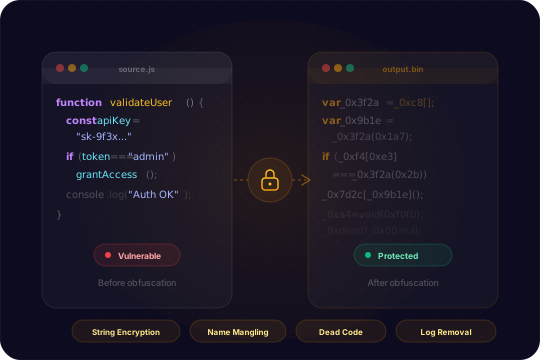
What changes
Make decompiled code harder to read, automate, and weaponise.
Obfuscation is not a replacement for runtime protection, but it changes the economics of reverse engineering. It hides obvious logic, removes useful breadcrumbs, makes automated analysis less reliable, and reduces the clarity of strings, symbols, and debugging artefacts.
- String encryption to reduce exposed secrets, URLs, labels, and indicators.
- Symbol and structure changes that make decompiled output harder to follow.
- Log removal and dead code insertion to reduce useful breadcrumbs.
- Advanced native-layer hardening options for enterprise use cases.
Static analysis resistance
Reduce clear identifiers and obvious control flow in decompiled app artefacts.
Secret exposure reduction
Keep strings and app constants from appearing plainly in packaged builds.
Layered with runtime defense
Combine obfuscation with runtime detection, response, and app integrity checks.
Best practice: use obfuscation alongside certificate pinning, app tamper checks, hook detection, root and jailbreak detection, and Shield Proxy for high-value workflows that expose sensitive API or business logic.